Wednesday, September 10, 2014

Project Management Process Groups & Knowledge Areas for PMP Certification

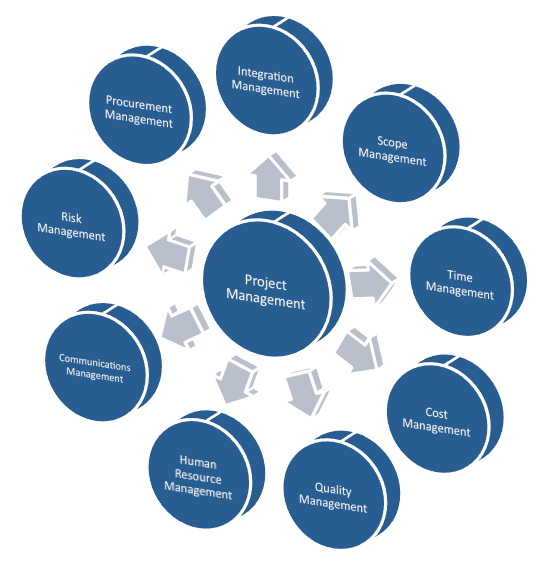
One of the basic concepts of PMBOK are the Project Management Process Groups and Project Management Knowledge Areas. For the PMP Certification exam, you need to know each of the process groups and knowledge areas and the mapping between the Project Management process groups and knowledge areas. So let's begin.

There are five Project Management process groups - Initiation, Planning, Execution, Monitoring and Control and Closing.


There are nine Project Management Knowledge Areas

  1. Integration Management
  2. Scope Management
  3. Time Management
  4. Cost Management
  5. Quality Management
  6. Human Resource Management
  7. Communications Management
  8. Risk Management
  9. Procurement Management


For the PMP Certification exam, you will need to know the each of the tasks under the individual process groups as well as which of these tasks map to which Project Management Knowledge area. Note that Integration Management is the only knowledge area which has tasks in all the process groups. Hence it is the most important chapter in PMBOK as well as the PMP certification exam. 


Tuesday, July 8, 2014

W3schools PHP Quiz Questions and Answers

PHP QUIZ
1. What does PHP stand for?
You answered:
PHP: Hypertext Preprocessor
 Correct Answer!

2. PHP server scripts are surrounded by delimiters, which?
You answered:
<?php…?>
 Correct Answer!

3. How do you write "Hello World" in PHP
You answered:
echo "Hello World";
 Correct Answer!

4. All variables in PHP start with which symbol?
You answered:
$
 Correct Answer!

5. What is the correct way to end a PHP statement?
You answered:
;
 Correct Answer!

6. The PHP syntax is most similar to:
You answered:
Perl and C
 Correct Answer!

7. How do you get information from a form that is submitted using the "get" method?
You answered:
$_GET[];
 Correct Answer!

8. When using the POST method, variables are displayed in the URL:
You answered:
False
 Correct Answer!

9. In PHP you can use both single quotes ( ' ' ) and double quotes ( " " ) for strings:
You answered:
True
 Correct Answer!

10. Include files must have the file extension ".inc"
You answered:
False
 Correct Answer!

11. What is the correct way to include the file "time.inc" ?
You answered:
<?php include "time.inc"; ?>
 Correct Answer!

12. What is the correct way to create a function in PHP?
You answered:
function myFunction()
 Correct Answer!

13. What is the correct way to open the file "time.txt" as readable?
You answered:
fopen("time.txt","r");
 Correct Answer!

14. PHP allows you to send emails directly from a script
You answered:
True
 Correct Answer!

15. What is the correct way to connect to a MySQL database?
You answered:
mysqli_connect(host,username,password,dbname);
 Correct Answer!

16. What is the correct way to add 1 to the $count variable?
You answered:
$count++;
 Correct Answer!

17. What is a correct way to add a comment in PHP?
You answered:
/*…*/
 Correct Answer!

18. PHP can be run on Microsoft Windows IIS(Internet Information Server):
You answered:
True
 Correct Answer!

19. In PHP, the die() and exit() functions do the exact same thing.
You answered:
True
 Correct Answer!

20. Which one of these variables has an illegal name?
You answered:
$my-Var
 Correct Answer!

W3Schools SQL Test Questions and Answers

SQL QUIZ
1. What does SQL stand for?
You answered:
Structured Query Language
 Correct Answer!

2. Which SQL statement is used to extract data from a database?
You answered:
SELECT
 Correct Answer!

3. Which SQL statement is used to update data in a database?
You answered:
UPDATE
 Correct Answer!

4. Which SQL statement is used to delete data from a database?
You answered:
DELETE
 Correct Answer!

5. Which SQL statement is used to insert new data in a database?
You answered:
INSERT INTO
 Correct Answer!

6. With SQL, how do you select a column named "FirstName" from a table named "Persons"?
You answered:
SELECT FirstName FROM Persons
 Correct Answer!

7. With SQL, how do you select all the columns from a table named "Persons"?
You answered:
SELECT * FROM Persons
 Correct Answer!

8. With SQL, how do you select all the records from a table named "Persons" where the value of the column "FirstName" is "Peter"?
You answered:
SELECT * FROM Persons WHERE FirstName='Peter'
 Correct Answer!

9. With SQL, how do you select all the records from a table named "Persons" where the value of the column "FirstName" starts with an "a"?
You answered:
SELECT * FROM Persons WHERE FirstName LIKE 'a%'
 Correct Answer!

10. The OR operator displays a record if ANY conditions listed are true. The AND operator displays a record if ALL of the conditions listed are true
You answered:
True
 Correct Answer!

11. With SQL, how do you select all the records from a table named "Persons" where the "FirstName" is "Peter" and the "LastName" is "Jackson"?
You answered:
SELECT * FROM Persons WHERE FirstName='Peter' AND LastName='Jackson'
 Correct Answer!

12. With SQL, how do you select all the records from a table named "Persons" where the "LastName" is alphabetically between (and including) "Hansen" and "Pettersen"?
You answered:
SELECT * FROM Persons WHERE LastName BETWEEN 'Hansen' AND 'Pettersen'
 Correct Answer!

13. Which SQL statement is used to return only different values?
You answered:
SELECT DISTINCT
 Correct Answer!

14. Which SQL keyword is used to sort the result-set?
You answered:
ORDER BY
 Correct Answer!

15. With SQL, how can you return all the records from a table named "Persons" sorted descending by "FirstName"?
You answered:
SELECT * FROM Persons ORDER BY FirstName DESC
 Correct Answer!

16. With SQL, how can you insert a new record into the "Persons" table?
You answered:
INSERT INTO Persons VALUES ('Jimmy', 'Jackson')
 Correct Answer!

17. With SQL, how can you insert "Olsen" as the "LastName" in the "Persons" table?
You answered:
INSERT INTO Persons (LastName) VALUES ('Olsen')
 Correct Answer!

18. How can you change "Hansen" into "Nilsen" in the "LastName" column in the Persons table?
You answered:
UPDATE Persons SET LastName='Nilsen' WHERE LastName='Hansen'
 Correct Answer!

19. With SQL, how can you delete the records where the "FirstName" is "Peter" in the Persons Table?
You answered:
DELETE FROM Persons WHERE FirstName = 'Peter'
 Correct Answer!

20. With SQL, how can you return the number of records in the "Persons" table?
You answered:
SELECT COUNT(*) FROM Persons
 Correct Answer!

Friday, June 13, 2014

What is the Salience Model in Project Management?

What is the Salience Model?

Every project has many stakeholders. Each project stakeholder has varying expectations. Stakeholder prioritization can be a nightmare. Managing the communication needs of the various project stakeholders is a tricky. Let’s see how the Salience Model helps put project stakeholders into perspective.

    Introduction

    The Salience Model for project stakeholders was developed by Mitchell, Agle, and Wood to help managers identify and analyze project stakeholder needs. Unlike, the Power/Interest or Power/Influence grids, the Salience Model uses three parameters to categorize stakeholders: Power, Legitimacy and Urgency. Each parameter is defined as follows:
        Power: Is the ability project stakeholders has to influence the outcome of an organization, deliverables, or a project
        Legitimacy: Is the authority, level of involvement project stakeholders have on a project.
        Urgency: Is the time expected by project stakeholders for responses to their expectations.

    This three-dimensional view of project stakeholders needs and expectations from a project can help managers narrow down the critical stakeholders for stakeholder management.
 

    The Salience Model Diagram

    The Salience Model for project stakeholders is graphically depicted as a Venn diagram. Each assessment parameter has a major circle and the intersections of each major circle helps you identify project stakeholders that have multiple needs.


Mitchell, Agle, and Wood related each area within the Venn diagram to a specific type of stakeholder. Mentioned below is a description of each type of project stakeholder as per the Salience Model:

A) Core/Definitive: These are the critical project stakeholders. As a Project Manager, you need to provide focused attention to these stakeholders.

B) Dominant: Such project stakeholders have power and legitimacy, but do not have urgency. You should focus on their expectations, but always there is not a lot of urgency.

C) Dependent: As per the Salience Model, these project stakeholders have no real power on the project. However, they need to be managed because they can quite easily choose to align themselves with other project stakeholders and hence influence your project.

D) Dangerous: Appropriately named classification, these stakeholders have power and urgency, but no legitimacy. Imagine a very senior person trying to force her views on the outcome of your project, without really being a part of it! A Project Manager needs to keep such stakeholders appropriately engaged or satisfied.

E) Latent/Dormant: Possibly the best category project stakeholders. These stakeholders only get into the project, if there is something has gone horribly wrong with it. Over-communication of micro-level details with them is also not a great thing to do.

F) Demanding: Such stakeholders in the Salience Model are people that always seem to think that their work needs your immediate attention. If you spend too much time and effort on these stakeholders, you won’t actually gain to much project mileage. There are other more important people to work with.

G) Discretionary: Another wonderful classification of project stakeholders. Give them regular status updates and they’ll be happy.

H) Non-stakeholders: These people are not stakeholders in the project. Investing time and effort on such people will not help you shape the outcome of your project in any manner.

Friday, January 17, 2014

Samsung Galaxy S5 - diamond plated with retina scan?

Looking to buy a new phone and going through the specs of what's available (Moto X, Nexus 5, LG G2, and Iphone 5s ofcourse) and what's to come (Samsung Galaxy S5). Being a Samsung afficionado for 4 years, I am super excited to read that Samsung may be launching the Samsung Galaxy S5 in March 2014. So I have decided to put my phone shopping on hold till March 2014. Here's what the rumour grapevine has about the specs and features of Samsung Galaxy S5. Fingers crossed! 

Samsung Galaxy S5 release date, news and rumors
  1. First and foremost, it is supposed to be the Diamond Phone. Yes, move on Iphone 5s Gold, here comes the diamond! Samsung is finally ditching plastic for real metal. Well, it’s not just any metal, but diamond- plated metal. According to another Korean IT news portal the R&D team at Samsung Electronics have been working on mechanisms to apply the diamond metal surface treatment technology to metal cases. “Diamond material is coated onto the metal case surface of smartphones. If the metal case is coated with a diamond material, vulnerabilities to scratches and deformation can be redressed. What can I say? Diamonds are forever! :o) Samsung Galaxy S5 - LEAK Samsung Galaxy S5 - LEAK
  2. Second comes the displaySamsung is not averse to the idea of incorporating a flexible display into the Galaxy series. The Galaxy Round that was launched last year comes with a 5.7-inch Amoled screen. The new Galaxy S5 could also sport a similar vertically oriented curved display or may not. Galaxy S5 is supposed to have a 2K display with 560ppi for screens as small as five inches. This is a leaked image of the Samsung Galaxy S5 home screen. 
  3. Third is the release date and price. The release date is expected to be sometime in March 2014, but rumour has it that Samsung may actually prepone the launch to February 2014 since the Samsung Galaxy S4 did not sell as many as predicted. Samsung Galaxy S5 will likely cost around £550 / $650 / AU$700
Ok, now for the nitty-gritties -- 
  • Finger print or Retina scanAnyone hoping that Samsung will follow in the footsteps of Apple and bring a fingerprint scanner to the Galaxy S5 could be disappointed if certain rumors are to be believed. A Samsung official apparently told the Korean Times that the company is "not yet developing the finger print technology" for its handsets. The eye scanning tech has been in talks after a Samsung exec spoke to Bloomberg and said "Many people are fanatical about iris recognition technology. We are studying the possibility." Ok either way is good as far as I am concerned. 
  • More power and battery - Samsung has already developed a 3GB RAM chip that will likely go in the Samsung Galaxy S5. With each new version of the samsung galaxy phones, Samsung has upped the power pack for its battery. So its expected that the samsung galaxy S5 will have more power than its predecessor S4 which has 2,600 mAh. Can we hope for 4,000mAh pack? Surely! 
  • Built-in projector? Yes please! - Rumour has it that the Samsung Galaxy S5 will have a built-in projector. Samsung already has built the Samsung Beam last year which was a niche device but its all about integrating the technology and Samsung has had one year to do it.. so they should be streaming and beaming with the Galaxy S5.
  • Samsung Galaxy Beam reviewSamsung Galaxy Beam review


Thursday, December 26, 2013

Risk Management Questions in Project Management, PMP, CAPM Certification tests


Sample Risk Management Questions in PMP exam


Value Stream Mapping Current state map markup and Future state map for a call center

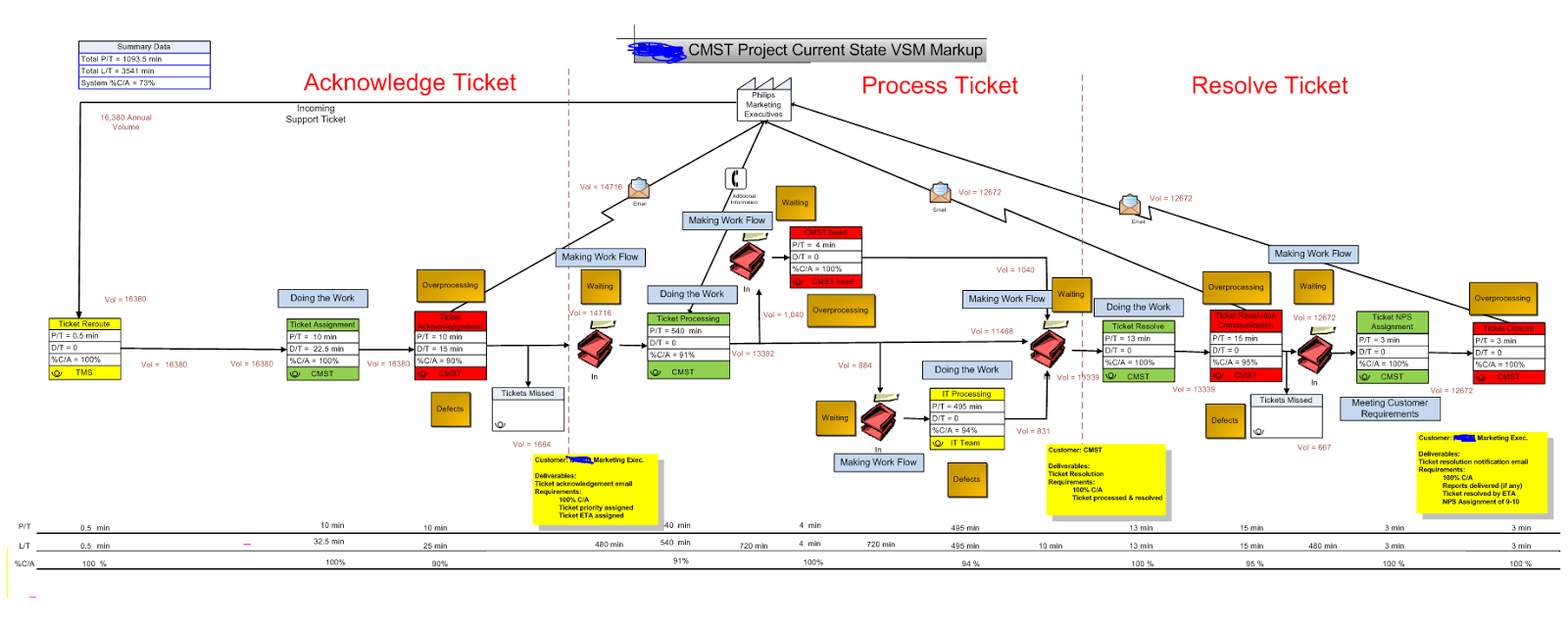
The next step in Value Stream Mapping is the Markup for the current state map. At this step, the bottleneck areas are identified in the current value stream map. As shown in the diagram below for the call center value stream map, a markup is created by identifying the bottlenecks at each step of the ticket resolution process. The type of bottleneck is also identified at this step such as Overprocessing, Defect, Waiting etc. These bottlnecks need to be removed and the process needs to be stream lined.


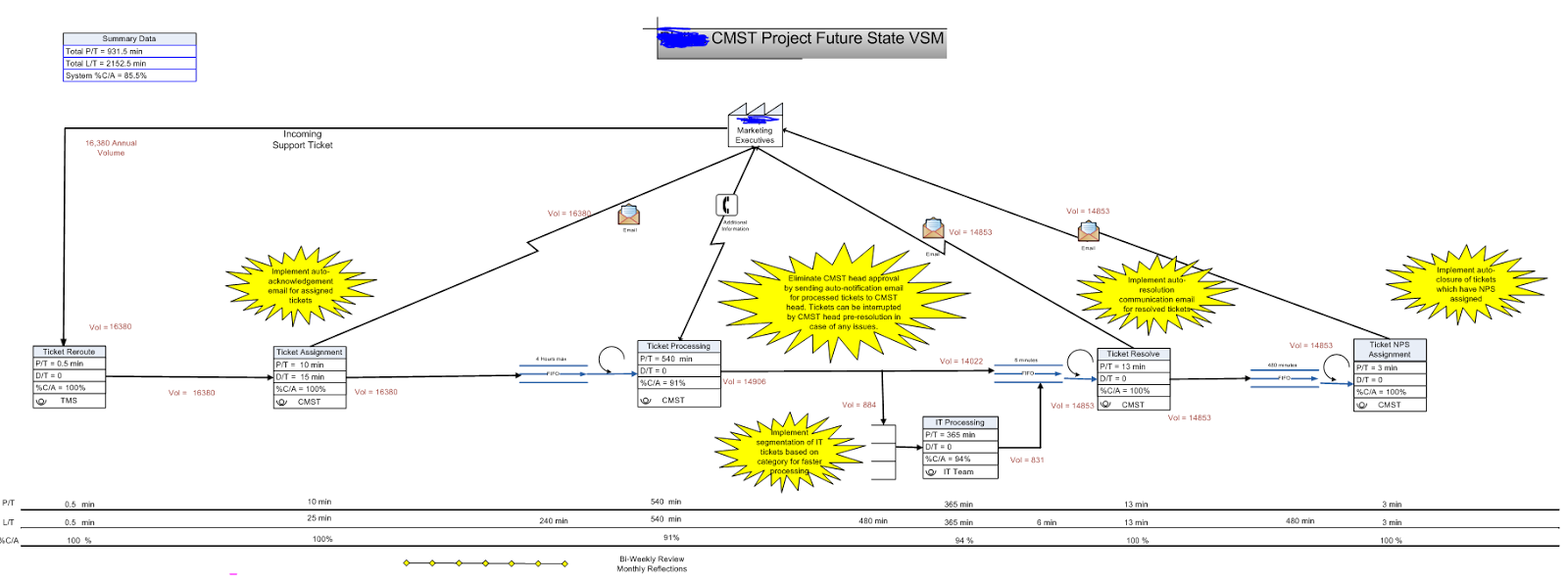
The last step in Value Stream Mapping is the Future State Mapping. In this step, the bottlenecks identified in the current state map markup are removed and the future streamlined process is documented as a diagram. The star bursts indicate the process improvements. The flow of the entity through the process is recorded. The volume of entities processed at each step of the process is also documented. Here is a sample future state diagram for a BPO call center that I created from a project that I worked on where "ticket" is the entity that passes through the process. The potential ticket volumes are recorder at each step. If you do not have the exact volumes, use a best guess estimate. The processing time and lead times are measured and calculated for each step. Click on the future state map image below to see full size image. This diagram was created using Microsoft Visio. Please leave any questions in the comments section below.